Whole House Surge Protector Installation Houston
Houston's power grid takes a beating. Between hurricane season, sudden thunderstorms, and the well-documented instability of the ERCOT grid, voltage spikes are not a rare event here. They happen multiple times a day, most of them too small to notice until your HVAC control board fails, your smart TV goes dark, or your refrigerator compressor burns out. A whole house surge protector is the single piece of electrical equipment that stops that damage before it starts. This guide explains exactly how the installation works, what it costs, and what to look for in a Houston electrician who can do the job right.
Key Takeaways
- A whole house surge protector installs directly at your electrical panel and shields every circuit in your home simultaneously.
- Houston's storm season and ERCOT grid instability make surge protection more critical here than in most U.S. cities.
- Point-of-use power strips offer almost no protection against large voltage spikes; a panel-level device is required for real coverage.
- Professional installation typically takes two to three hours and may require a permit depending on your municipality.
- Some homeowners insurance carriers offer premium discounts after a whole house surge protector is installed; check with your insurer.
What Is a Whole House Surge Protector and How Does It Work?
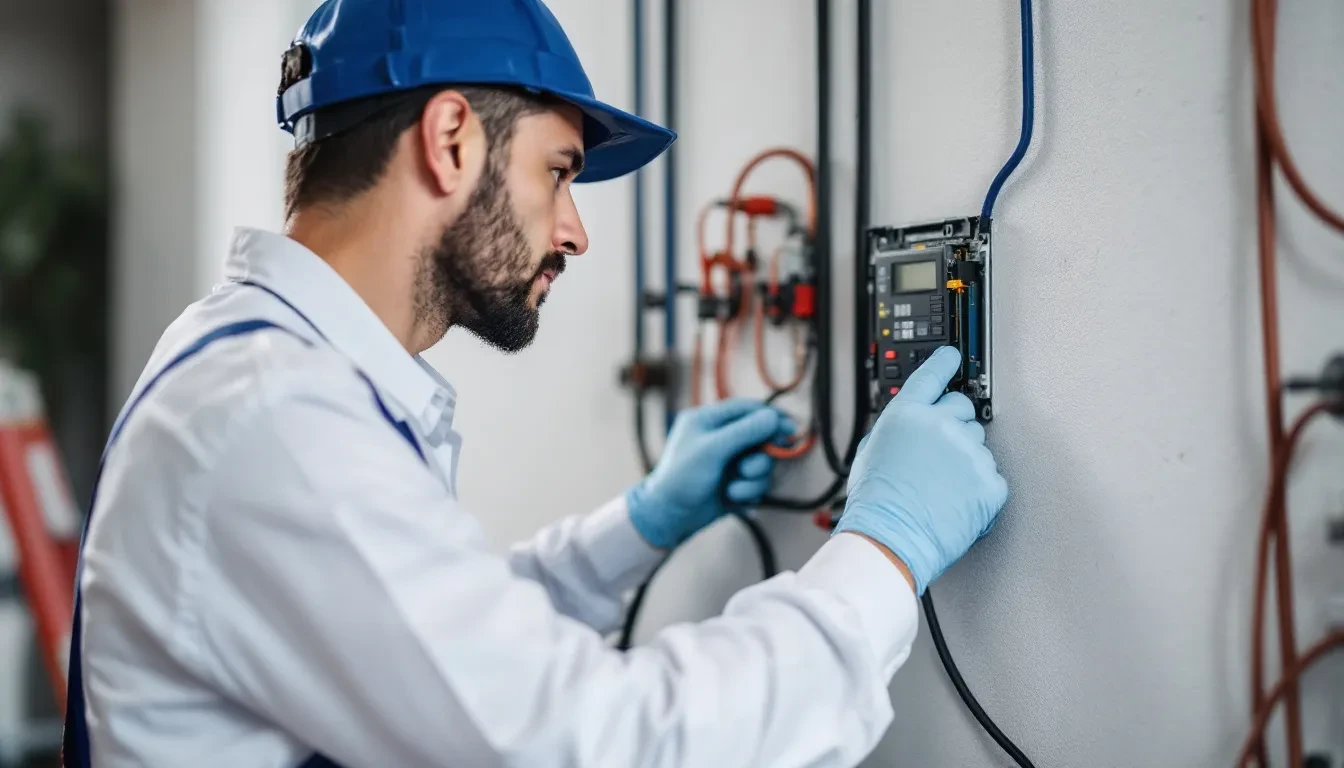
A whole house surge protector, also called a Type 1 or Type 2 surge protective device (SPD), connects directly to your home's main electrical panel. When a voltage spike hits your system, the device clamps the excess voltage and redirects it safely to ground before it can reach your appliances, electronics, or wiring.
The Difference Between a Panel-Level Device and a Power Strip
Most people own a power strip with a "surge protection" label. Those strips are point-of-use devices rated at a few hundred joules at best. They protect one outlet cluster. A whole home surge protector is rated at 40,000 joules or higher and protects every circuit in the house simultaneously. The National Electrical Manufacturers Association (NEMA) classifies these as separate categories precisely because their performance levels are not comparable.
Clamping Voltage and Joule Rating Explained
Two numbers matter most on any surge protector specification sheet. Clamping voltage is the voltage level at which the device activates and starts diverting excess current. Lower is better; look for 400V or below for a residential device. Joule rating measures how much surge energy the device can absorb over its lifetime. A whole home unit should be rated at 40,000 joules or higher. A cheap power strip rated at 300 joules will be overwhelmed by a single utility switching event.
Why Houston Homes Need Whole Home Surge Protection

Houston sits in a part of Texas where atmospheric conditions create some of the highest lightning strike density in the country. Add a deregulated power grid that has faced serious reliability challenges, and the case for home surge protection becomes straightforward.
ERCOT Grid Instability and Your Home
The ERCOT grid serves most of Texas, including the Greater Houston area, as an isolated system without strong connections to neighboring grids. That isolation means voltage fluctuations from large industrial loads, generation trips, or restoration events after storms travel directly into residential distribution lines. Every time the grid restores power after an outage, a transient voltage spike rides into your home on the utility line. Your electrical system absorbs that spike unless a whole home surge protector is in place.
Houston Storm Season
Houston averages more than 60 thunderstorm days per year. Lightning does not have to strike your house directly to cause damage. A nearby ground strike couples energy into power lines, cable lines, and even water pipes. That induced surge travels into your home through the utility connection and can exceed thousands of volts in milliseconds, far beyond what any appliance or electronic device is designed to handle.
What Causes Power Surges in Houston, TX?
Understanding the sources of surges helps homeowners see why a whole home solution is necessary rather than optional.
External Sources
- Lightning strikes: Direct or nearby strikes create massive voltage transients on power lines.
- Utility switching: Power companies switch load banks and capacitor banks routinely, each event sending a transient into the distribution network.
- Grid restoration: Power coming back on after an outage almost always carries a voltage spike.
- Downed lines: Contact between a high-voltage transmission line and a distribution line sends extreme voltage into residential circuits.
Internal Sources
- Large motor loads: HVAC compressors, pool pumps, and refrigerator compressors create small surges every time they start or stop.
- Appliance cycling: Dishwashers, washing machines, and dryers generate repetitive transients that degrade sensitive electronics over time.
- Wiring faults: Loose connections inside your electrical system can generate arcing events that look like surges to downstream devices.
The IEEE (Institute of Electrical and Electronics Engineers) documents that most appliance failures attributed to "age" are actually the result of accumulated surge damage from internal sources. A whole home device handles both external and internal sources.
What Appliances and Equipment Does a Whole Home Surge Protector Protect?
Every device connected to your electrical system benefits from panel-level surge protection. Some are especially expensive to replace or repair.
High-Value Targets in a Typical Houston Home
- HVAC systems: Modern variable-speed systems use electronic control boards that cost $500 to $1,500 to replace. Surge damage to a compressor can total the entire unit.
- Refrigerators and freezers: Compressor electronics are highly sensitive to voltage spikes.
- Smart home devices and security systems: Low-voltage electronics have minimal surge tolerance built in.
- Standby generators: Generator control panels and automatic transfer switches contain electronics that surge damage can destroy. If you have a Generac or Briggs standby generator, protecting it with a whole home SPD is essential.
- EV chargers: Level 2 chargers connect directly to your electrical panel and are exposed to every grid transient that comes through.
- Washer, dryer, and dishwasher: Control boards in modern appliances are far more surge-sensitive than older mechanical models.
- Home office and entertainment equipment: Computers, televisions, and gaming consoles store data and run processors that are vulnerable to even small voltage events.
Signs Your Houston Home Needs Surge Protection Now
Some warning signs indicate your home is already experiencing surge damage or is at high risk.
Warning Signs to Watch For
- Appliances or electronics fail more frequently than their expected lifespan.
- You have noticed lights flickering during storms or when large appliances kick on.
- Your home was built before 2000 and has never had an electrical panel upgrade.
- You recently installed a standby generator, EV charger, or solar system, all of which add new points of electrical interaction.
- You live near a major road, railroad, or industrial area where utility switching events are frequent.
- Your neighborhood loses power regularly during storms and you experience the voltage spike when it comes back.
If any of these apply, your home is not just at risk; it may already be absorbing cumulative damage to every device on every circuit.
How the Whole House Surge Protector Installation Process Works
Installation is a licensed electrician's job. The process involves live electrical panel work and, in many Houston-area jurisdictions, requires a permit.
Step-by-Step Installation Overview
Step 1: Panel inspection. Before any device is installed, the electrician checks your electrical panel for available breaker space, signs of corrosion, and overall condition. An outdated or damaged panel may need an upgrade before a surge protector can be properly integrated. The condition of your panel directly affects which surge protector model is compatible.
Step 2: Device selection. The electrician selects a listed SPD with the appropriate voltage rating, joule rating, and clamping voltage for your panel and service entrance configuration.
Step 3: Permit (where required). In the City of Houston and many Greater Houston municipalities, adding a device to a main electrical panel requires a permit and inspection. A licensed electrician handles this. Skipping the permit creates liability issues and can affect your homeowners insurance coverage.
Step 4: Installation and connection. The SPD mounts to the panel or in a small enclosure adjacent to it. Leads connect to a dedicated breaker or directly to the main lugs. The ground connection is critical; a poor ground renders the device ineffective.
Step 5: Testing and inspection. The electrician verifies the device is properly connected and functioning before closing the panel. If a permit was pulled, the municipal inspector signs off.
How Long Does Installation Take?
For a straightforward panel in good condition, professional installation takes two to three hours. If the panel needs work first, or if the permit inspection requires a separate visit, the timeline extends accordingly.
How to Choose the Right Surge Protector for Your Electrical Panel
Not every surge protector is compatible with every panel. Getting this wrong means the device either will not fit or will not perform correctly.
Key Compatibility Factors
- Service entrance type: Single-phase 120/240V residential service is standard in Houston homes, but the specific amperage (100A, 150A, 200A, 400A) affects which devices install correctly.
- UL 1449 listing: Only buy a device that carries a current UL 1449 listing. This is the Underwriters Laboratories standard for surge protective devices and is required for code compliance in most jurisdictions.
- NEMA 3R enclosure rating: If any part of the installation is exposed to weather, the enclosure must be rated for outdoor use.
- Indicator lights and audible alarms: A quality device includes a visual indicator so you can confirm it is still functional after a major surge event.
- Panel age and condition: Panels older than 25 to 30 years, or brands known for reliability issues, may need to be evaluated or upgraded before installation.
Cost Breakdown for Houston Homeowners
Pricing for whole house surge protector installation in Houston typically falls in the following ranges, though your specific costs depend on panel access, permit fees, and the device selected:
- Device cost: $150 to $400 for a quality UL-listed whole home SPD.
- Labor: $100 to $300 for a straightforward installation on an accessible, code-compliant panel.
- Permit fees: Variable by municipality; typically $50 to $150 in the Houston area.
- Panel upgrade (if needed): If your panel is outdated or lacks capacity, budget separately for that work. See our guide to Houston electrical costs for more context.
Total installed cost for most Houston homes: $300 to $700. That is less than the deductible on most appliance claims, and far less than replacing an HVAC control board or a refrigerator compressor.
Homeowners Insurance Discounts
Some homeowners insurance carriers reduce premiums or offer credits after a whole house surge protector is professionally installed. Ask your insurer before the installation and request documentation from your electrician afterward. Requirements vary by carrier, so confirm the specifics with your insurance agent directly.
Why Choose VCG Electrical Services for Surge Protector Installation in Houston?
VCG Electrical Services LLC has served Houston and Greater Houston since 2018. Every installation is completed by an owner-led crew; the company does not use subcontractors. That means the same standards apply on every job, and you are not dealing with a rotating cast of unfamiliar workers.
Pricing is flat and upfront before any work begins. No surprise charges after the panel is open. If you call with a surge protection question and a licensed technician identifies a panel issue during the inspection, you will know the full cost before agreeing to any additional work.
VCG Electrical Services is also an authorized Generac and Briggs and Stratton standby generator installer. That authorization matters for surge protection because Houston homes with standby generators have a more complex electrical system. The transfer switch, the generator control panel, and the main panel all need to be considered when sizing and placing a surge protective device. A general handyman or unlicensed installer will not know how those systems interact. Learn more about standby generator services and how they relate to your home's overall electrical protection.
Emergency electrical service is available 24 hours a day, seven days a week. If a storm event causes a surge that damages your system tonight, you can reach VCG Electrical Services at (832) 530-2987.
You can also compare generator options relevant to Houston power reliability in our article on whole house generators versus portable generators.
Frequently Asked Questions About Whole Home Surge Protection in Houston
Does surge protection help with lightning strikes?
A whole house surge protector significantly reduces damage from nearby lightning strikes that couple energy into power lines. It cannot stop a direct strike to your home's service entrance, but it will suppress the transient voltage that travels through the utility line from a nearby strike. Combining a panel-level SPD with point-of-use protectors on sensitive electronics gives you layered protection against both direct and indirect lightning events.
How long does whole house surge protector installation take?
Most installations on an accessible, code-compliant panel take two to three hours. If a permit is required and the municipal inspector needs a separate visit, add one to three business days for the inspection. If the panel needs repair or upgrade work first, that timeline extends based on the scope of work.
What is the difference between a whole house surge protector and a power strip?
A power strip surge protector is a point-of-use device rated at a few hundred joules that protects only the outlets plugged into it. A whole house surge protector is a panel-level device rated at 40,000 joules or more that protects every circuit in the home simultaneously. The two are not interchangeable. Power strips provide almost no protection against large external surges from lightning or utility grid events.
How much does whole house surge protector installation cost in Houston?
Total installed cost typically ranges from $300 to $700 for most Houston homes, covering the device, labor, and permit fees. The device itself runs $150 to $400 depending on the rating and features. Labor adds $100 to $300. If your electrical panel needs work before the device can be installed, that is a separate cost. A licensed electrician should give you a flat, itemized quote before starting work.
Do I need an electrician to install a whole house surge protector?
Yes. Installation requires direct work inside your main electrical panel, which involves live components and connections to your home's service entrance. In most Houston-area municipalities, this work also requires a permit. Unlicensed installation voids equipment warranties, may violate your homeowners insurance policy, and creates a genuine safety risk. This is not a DIY project.
How do I know if my home already has surge protection?
Open your electrical panel cover and look for a device mounted to or adjacent to the panel with two leads going to a dedicated breaker or to the main lugs. It will typically have an indicator light and be labeled as a surge protective device or SPD. If you are not comfortable inspecting the panel yourself, a licensed electrician can check during any service call. Many Houston homes, especially those built before 2010, do not have panel-level surge protection installed.
Will a whole house surge protector protect my HVAC system and appliances?
Yes. Because the device installs at the main electrical panel, it protects every circuit fed by that panel, including your HVAC system, refrigerator, washer, dryer, water heater, and all other hardwired or outlet-connected appliances. This is the primary advantage over point-of-use devices, which only protect what is plugged into them. For HVAC systems, which are among the most expensive items in a Houston home to repair or replace, panel-level surge protection is especially valuable.
How long does a whole house surge protector last, and when should it be replaced?
Most quality devices are rated for a service life of five to ten years under normal conditions. However, a device that has absorbed a large surge event may lose capacity immediately even if it appears functional. Look for models with an indicator light or audible alarm that signals when the device has been depleted. After any major storm or grid event, visually check the indicator. Replace the device if the indicator shows it has been compromised, or on the manufacturer's recommended schedule, whichever comes first.
Ready to protect your home? Contact VCG Electrical Services LLC to schedule whole house surge protector installation in Houston. Flat, upfront pricing. No subcontractors. Available 24/7. Call (832) 530-2987 or visit vcgelectrical.com/contact to get started.
Published by VCG Electrical. VCG Electrical Services LLC has served Houston and Greater Houston since 2018.